Blog
Tutorials
Leveraging Product Cohorts in Your eCommerce Business
Uncover which products drive loyalty with product-level cohort analysis and boost customer LTV using data-driven insights
Jan 4, 2025
What is Product-Level Cohort Analysis?
Product-level cohort analysis segments customers into groups (cohorts) based on the first product they purchased from your store. This analysis helps identify how different products influence customer retention, repeat purchases, and long-term engagement.
By tracking these cohorts over time, eCommerce teams can uncover which products bring in high-value customers and which drive sustained loyalty.
Inside the Dashboard: Understanding the View
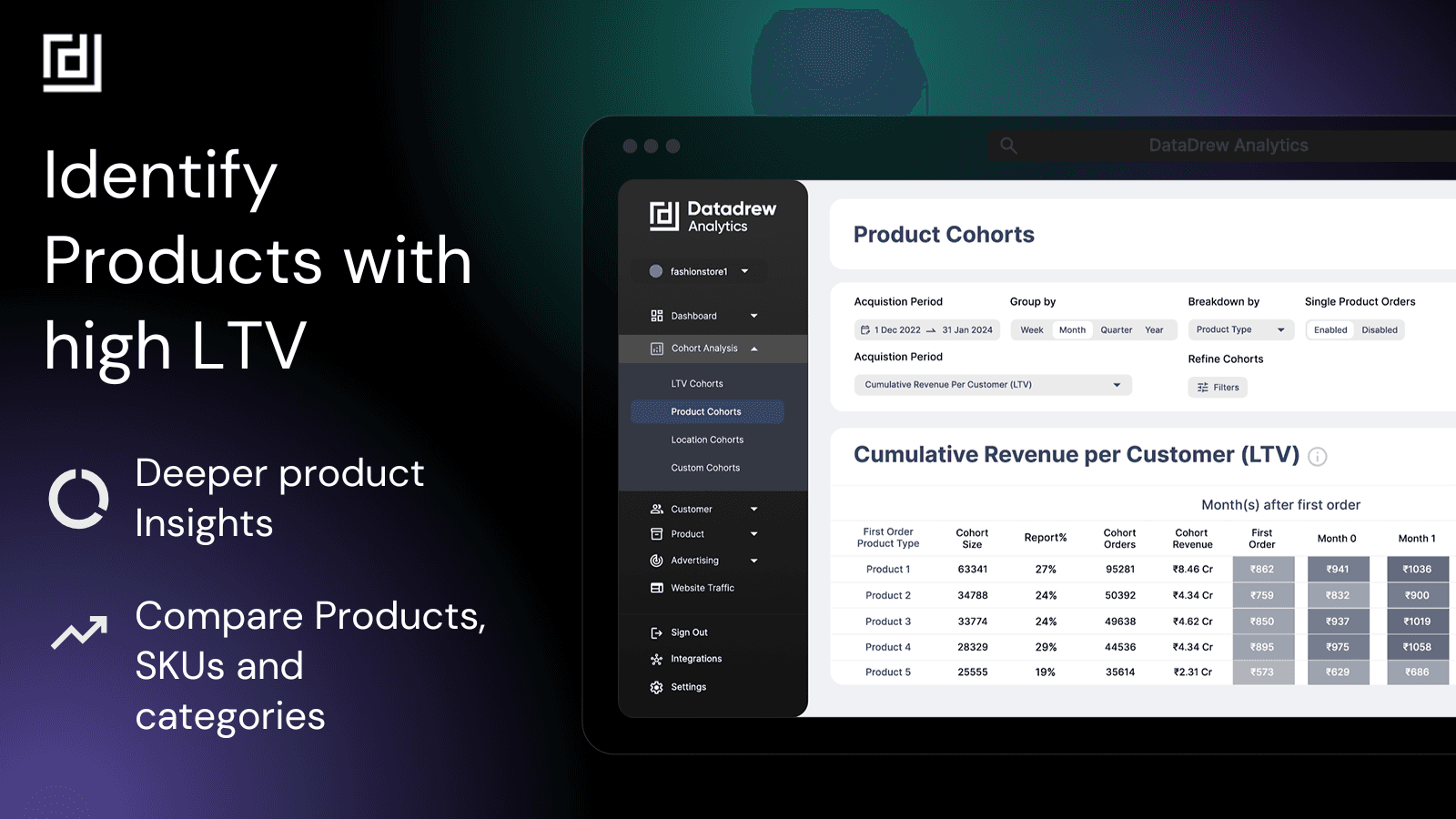
The screenshot above displays Cumulative Revenue per Customer (LTV) segmented by the first product purchased.
Each row represents a cohort of customers who began their journey with a specific product.
Each column (Month 0 to Month 3) shows how customer value evolves over time after that first order.
Key Metrics Displayed:
Cohort Size: Number of customers whose first order included that product.
Repeat %: Percentage of customers who made repeat purchases after the first order.
Cohort Orders & Cohort Revenue: Total orders and cumulative revenue generated by each cohort.
LTV by Month: Revenue per customer over time — a direct indicator of how loyalty and spending evolve.
Some Insights from the Data & cases which helped clients
High Initial Value Segments
Certain premium products in the “Performance Apparel” category showed significantly higher first-order values (₹3,500+), indicating they attract customers with stronger spending potential right from their first purchase.
Strong Repeat Behavior
Two mid-tier products in the “Activewear” segment demonstrated 17% repeat rates, suggesting strong customer loyalty. Their lifetime value (LTV) continued to grow over three months, signalling consistent engagement and satisfaction with the product experience.
Steady Revenue Growth
Across most product cohorts, there’s a clear upward trend in LTV from the first month to the third — for instance, an average increase from ₹3,450 to ₹3,750. This indicates healthy post-purchase behavior and incremental contribution from returning customers.Some lower-tier products in “Essentials” and “Accessories” categories showed repeat rates around 10–13%, suggesting room to improve retention. Focused cross-sell campaigns or loyalty nudges could help uplift their long-term value.
Opportunities for Growth
Some lower-tier products in “Essentials” and “Accessories” categories showed repeat rates around 10–13%, suggesting room to improve retention. Focused cross-sell campaigns or loyalty nudges could help uplift their long-term value.
The Value of Product-Level Cohort Analysis
Understanding Customer Lifecycle
Identify how long customers remain active after purchasing a specific product and tailor retention campaigns accordingly.Identifying High-Value Entry Products
identify Products that not only attract new buyers but also retain them — making them great candidates for first-purchase promotions.Marketing & Retention Strategy
Products with strong retention metrics should be featured more prominently in acquisition campaigns, while low-repeat products can benefit from follow-up engagement strategies (emails, loyalty rewards, etc.).Product Development Insights
High-LTV products indicate strong product-market fit and can guide future design and inventory decisions.
Expanding the Analysis
By Product Type:
Group products (e.g., jackets, leggings, skorts) to identify which categories generate longer-term loyalty.
By Location:
Compare how customer behavior differs across cities or countries — for instance, certain apparel types might perform better in colder regions.
By Custom Parameters:
Tag cohorts using customer or order attributes such as “VIP,” “discount buyer,” or “newsletter subscriber” to reveal nuanced behavioral trends.
Conclusion
Product-level cohort analysis transforms raw transaction data into actionable insights.
It enables eCommerce brands to pinpoint which products create loyal customers, where engagement drops off, and how to optimize marketing spend for long-term growth.
By leveraging tools like DataDrew, these cohorts are automatically generated and updated from lifetime customer data — making it effortless to track evolving customer value across products.
In short:
Product-level cohorts don’t just show what’s selling — they reveal what’s building relationships.
Share